 |
| rural homestays. |
Thursday, November 15, 2007

Tuesday, November 13, 2007
a what? a classroom in uganda.
Education in Uganda is seen as one of the most important things in life.
Education means a job (hopefully).
A job means money.
Money means food and a home.
My home stay Mum said that her number one priority is giving her children a good education. She chose education over electricity.
A little about the education system in Uganda:
Primary School is essentially elementary school in the US. The levels are P1-P7. Secondary School is a mix of junior high and high school. The levels are P1-P6. It gets complicated here because P1-P4 is “O” level and P5-P6 is “A” level. The distinction, from what I have gathered, is that “A” level gets to specify in their best subjects, as opposed to general classes. And this does not mean a choice of what to study, but a placement into subjects based on exam scores. University is typically three years, for most “courses” (except law and medicine). Again, they do not get to choose their course; the school looks at their exams and offers them to come for that course alone. Exams, therefore, are extremely important. Imagine the amount of stress put on these KIDS, for they are essentially pining for their future everyday starting in primary school!!!
Oh yah, students get to go to school when they have money, not the age. The P2 class I observed ranged from seven to fourteen year olds (avg. was 9 years).
School fees and uniforms are common. Public schooling is not preferred, so most schools are “religious” private school. School fees are one of the biggest headaches of families. I was at my home stay on the first day of school and along with fees, they also had to supply notebooks, pencils, a broom, and toilet paper: these alone were a struggle for my family. Today I was blown away with what school fees actually are: 10,000 Ush per term (three terms per level). That’s about $5.72! On top of school fees, are uniform charges (which are about 10,000Ush) and if you want lunch that’s another 10,000Ush and if you want break porridge that’s another 5,000Ush, and if you want tutoring after school that’s an additional 10,000Ush. If you got all of these if would equal 45,000Ush… a grand total of $25.72 per term. That number multiplied by three every year AND by each child in the family can be very difficult to come by. That blows my mind because I think of what trivial purchases I make with that amount and yet it could easily help a child be educated and thus his future.
Another thing that blows my mind is that students leave at an average of 7 am and get home on average between 4-6 pm (except P1-P2 who may leave at 1pm). Plus walking. Then chores and cooking and revisions at home. The life of a student! Anyone who says Africa is lazy should be punched.
I visited my sister Phionah’s P2 classroom today at Bishop Central Primary School. They are identified by their bright pink uniforms (the “pink school” as opposed to the aqua or purple school). There were 2 teachers, Cathy and Ronah for a classroom of 80 students!! The classroom was still about the size of a classroom in the US, but instead of desks were rows of benches and tables. And kids crowded in! (I have heard of much worse ratios, especially in rural school where as many as 1-200 students in one class!!)
When I walked in they all rose and welcomed me to P2 in unison. Learning is basically memorization and repetition and lists: very low on Bloom’s Taxonomy. There is no “Why?” question asked or critical thinking, just straightforward copying and memorization of the answers. But that is not necessarily the teacher or students fault:: there are NO resources. There was only one book, for the teacher, in the whole classroom. A chalkboard. And a small notebook (and pencil) for each subject, for each students. It makes sense why they are forced to memorize and repeat everything, yah?!
I should have known better to go into a class and not be asked to teach… so I wasn’t surprised too much when they asked what I wanted to teach! I did a warm-up song (from VBS) and gave a short English lesson of six words. I was nervous and laughing before I started, but I felt really comfortable and at home teaching. It was FUN!
Similar to schools in the US, to keep them alert they did an activity of jumping and clapping and yelling and dancing (adorable) in between subjects.
Cathy, a new teacher, told me that she guesses that 20+ students will not be promoted to P3, or even demoted to P1. How heartbreaking: so much money wasted. BUT I wonder if it is because the education system is not appropriate for all students. Special education, other than physical handicaps, doesn’t exist. (You can get one-on-one lessons after school, but when money for uniforms is already a problem, so are tutors!) One boy was claimed to be essentially bad or lazy and not a hard worker because he never completes his assignments on time. He was hit with the stick… broke my heart! Teachers are not lovey-dovey. Students seem to fear them, or at least them with the stick in their hand. (I think the stick is a culture/classroom management thing, not a hatred beating tool… I hope.)
The social studies exercise was listing “needs of people in school,” of which the first five responses were: food, toilets, water, uniforms, shoes… then came classes, teachers, books. I will let this speak on its own.
I hope to go back to visit soon. The teachers (and students!) were kind and happy to have me visit.
Education means a job (hopefully).
A job means money.
Money means food and a home.
My home stay Mum said that her number one priority is giving her children a good education. She chose education over electricity.
A little about the education system in Uganda:
Primary School is essentially elementary school in the US. The levels are P1-P7. Secondary School is a mix of junior high and high school. The levels are P1-P6. It gets complicated here because P1-P4 is “O” level and P5-P6 is “A” level. The distinction, from what I have gathered, is that “A” level gets to specify in their best subjects, as opposed to general classes. And this does not mean a choice of what to study, but a placement into subjects based on exam scores. University is typically three years, for most “courses” (except law and medicine). Again, they do not get to choose their course; the school looks at their exams and offers them to come for that course alone. Exams, therefore, are extremely important. Imagine the amount of stress put on these KIDS, for they are essentially pining for their future everyday starting in primary school!!!
Oh yah, students get to go to school when they have money, not the age. The P2 class I observed ranged from seven to fourteen year olds (avg. was 9 years).
School fees and uniforms are common. Public schooling is not preferred, so most schools are “religious” private school. School fees are one of the biggest headaches of families. I was at my home stay on the first day of school and along with fees, they also had to supply notebooks, pencils, a broom, and toilet paper: these alone were a struggle for my family. Today I was blown away with what school fees actually are: 10,000 Ush per term (three terms per level). That’s about $5.72! On top of school fees, are uniform charges (which are about 10,000Ush) and if you want lunch that’s another 10,000Ush and if you want break porridge that’s another 5,000Ush, and if you want tutoring after school that’s an additional 10,000Ush. If you got all of these if would equal 45,000Ush… a grand total of $25.72 per term. That number multiplied by three every year AND by each child in the family can be very difficult to come by. That blows my mind because I think of what trivial purchases I make with that amount and yet it could easily help a child be educated and thus his future.
Another thing that blows my mind is that students leave at an average of 7 am and get home on average between 4-6 pm (except P1-P2 who may leave at 1pm). Plus walking. Then chores and cooking and revisions at home. The life of a student! Anyone who says Africa is lazy should be punched.
I visited my sister Phionah’s P2 classroom today at Bishop Central Primary School. They are identified by their bright pink uniforms (the “pink school” as opposed to the aqua or purple school). There were 2 teachers, Cathy and Ronah for a classroom of 80 students!! The classroom was still about the size of a classroom in the US, but instead of desks were rows of benches and tables. And kids crowded in! (I have heard of much worse ratios, especially in rural school where as many as 1-200 students in one class!!)
When I walked in they all rose and welcomed me to P2 in unison. Learning is basically memorization and repetition and lists: very low on Bloom’s Taxonomy. There is no “Why?” question asked or critical thinking, just straightforward copying and memorization of the answers. But that is not necessarily the teacher or students fault:: there are NO resources. There was only one book, for the teacher, in the whole classroom. A chalkboard. And a small notebook (and pencil) for each subject, for each students. It makes sense why they are forced to memorize and repeat everything, yah?!
I should have known better to go into a class and not be asked to teach… so I wasn’t surprised too much when they asked what I wanted to teach! I did a warm-up song (from VBS) and gave a short English lesson of six words. I was nervous and laughing before I started, but I felt really comfortable and at home teaching. It was FUN!
Similar to schools in the US, to keep them alert they did an activity of jumping and clapping and yelling and dancing (adorable) in between subjects.
Cathy, a new teacher, told me that she guesses that 20+ students will not be promoted to P3, or even demoted to P1. How heartbreaking: so much money wasted. BUT I wonder if it is because the education system is not appropriate for all students. Special education, other than physical handicaps, doesn’t exist. (You can get one-on-one lessons after school, but when money for uniforms is already a problem, so are tutors!) One boy was claimed to be essentially bad or lazy and not a hard worker because he never completes his assignments on time. He was hit with the stick… broke my heart! Teachers are not lovey-dovey. Students seem to fear them, or at least them with the stick in their hand. (I think the stick is a culture/classroom management thing, not a hatred beating tool… I hope.)
The social studies exercise was listing “needs of people in school,” of which the first five responses were: food, toilets, water, uniforms, shoes… then came classes, teachers, books. I will let this speak on its own.
I hope to go back to visit soon. The teachers (and students!) were kind and happy to have me visit.
Monday, November 12, 2007
island camping.
this weekend i went camping with sarah and kimberly on an island in the middle of Lake Victoria, one of the largest fresh water lakes in the world. We set up our extremely-ridiculously-heavy tent on the white sand, at the end of the beach. it was relaxing and we spent time roasting marshmallows in our campfire, talking, and reading in hammocks and in the hot sun. it was fabulous! it was so great to have alone time, that was unstructured relaxing... much needed break from our consistently busy weekends and weekdays! :)
Thursday, November 8, 2007
hello friends and family at home!
I am posting three blogs that are fairly long. I apologize but so much has happened and I want to give you a full perspective of what I have been going through these past two weeks. just a beware warning before you start!
Also, I apologize for the lack of communication recently. It has been equally (if not more) frustrating for me not to have a good internet connection. And when I say good I mean being able to send more than one message every day because it keeps cutting in or being crazy slow. please pray that I would not be bitter or anxious about reading emails, researching, or registering for classes. It is a daily challenge to be okay with (or without!) it.
So I will write to you all when I have a chance, I have not forgotten about you!! This is a blanket message that I love you all and am coming home next month, and will want to have a good convo over a cup of tea with all of you!
Love aimee
Also, I apologize for the lack of communication recently. It has been equally (if not more) frustrating for me not to have a good internet connection. And when I say good I mean being able to send more than one message every day because it keeps cutting in or being crazy slow. please pray that I would not be bitter or anxious about reading emails, researching, or registering for classes. It is a daily challenge to be okay with (or without!) it.
So I will write to you all when I have a chance, I have not forgotten about you!! This is a blanket message that I love you all and am coming home next month, and will want to have a good convo over a cup of tea with all of you!
Love aimee
Hmmmm.
note: just an update, i am safe. :)
My arrival back to ucu was startling. Kimberly went to our room and found that it had been broken into while we were gone. Walking into the room was extremely creepy, seeing their entrance through the window and everything pulled out and searched through… So much could have been missing, and we are so grateful that only some money was taken. (our laptops were next to the money, and they were still there… amazing!).
because of the size of our window space, we are fairly sure a kid was involved, which breaks my heart because it likely will be used for school fees or food… what a desperate and broken world.
One thing I took from this, and have been reminded of a lot lately, is the shortness of life and the meaningless of material things. It put life into perspective and realigned my priorities. Life is becoming less and less about things, grades, perfection and fear, and more about people, relationships, love. “To live is Christ.”
Miracle?!! Before the trip I was wondering aloud with my friends why I still had my passport in my room. When I got back it was missing. Our intern said he was confident my passport was with the others at immigration, but I was (and still am) 99% sure that i still had it. I was set to get a new one (and part with all my stamps ) and was okay with that, BUT today the intern told me he had it. I literally jumped up and down!!!!
Both kimber and I are recovering and our nerves are claming, but are very emotionally drained. A praise is that it brought us closer together, but a prayer request would be continued healing from this traumatic experience (especially for the next night the power goes out) and a renewed trust in people.
My arrival back to ucu was startling. Kimberly went to our room and found that it had been broken into while we were gone. Walking into the room was extremely creepy, seeing their entrance through the window and everything pulled out and searched through… So much could have been missing, and we are so grateful that only some money was taken. (our laptops were next to the money, and they were still there… amazing!).
because of the size of our window space, we are fairly sure a kid was involved, which breaks my heart because it likely will be used for school fees or food… what a desperate and broken world.
One thing I took from this, and have been reminded of a lot lately, is the shortness of life and the meaningless of material things. It put life into perspective and realigned my priorities. Life is becoming less and less about things, grades, perfection and fear, and more about people, relationships, love. “To live is Christ.”
Miracle?!! Before the trip I was wondering aloud with my friends why I still had my passport in my room. When I got back it was missing. Our intern said he was confident my passport was with the others at immigration, but I was (and still am) 99% sure that i still had it. I was set to get a new one (and part with all my stamps ) and was okay with that, BUT today the intern told me he had it. I literally jumped up and down!!!!
Both kimber and I are recovering and our nerves are claming, but are very emotionally drained. A praise is that it brought us closer together, but a prayer request would be continued healing from this traumatic experience (especially for the next night the power goes out) and a renewed trust in people.
sound of music: the african way.
What a beautiful day of hiking!! With packed pb and jelly sandwhiches, four fun friends, and my camera, we set out hiking in Mt Elgon National Park and down Sipi Falls (both in Southeast Uganda, bordering Kenya).
It was one of the more-prefect days of my time in Uganda. We hiked all day through every terrain imaginable: in the rainforest, through mud, across sketchy bridges and ladders, through fields of matooke (bananas) and maize (corn), and through villages. Our hike culminated at the top of a mountain near an acacia tree (think lion king), overlooking the valley, and at the end of a maize field. There we ate roasted corn (which is a wonderful favorite of mine) with Ugandan boys while overlooking miles of green rolling hills. And listening to three majestic waterfalls gushing. It was a moment I will never forget. Fabulous.
It was one of the more-prefect days of my time in Uganda. We hiked all day through every terrain imaginable: in the rainforest, through mud, across sketchy bridges and ladders, through fields of matooke (bananas) and maize (corn), and through villages. Our hike culminated at the top of a mountain near an acacia tree (think lion king), overlooking the valley, and at the end of a maize field. There we ate roasted corn (which is a wonderful favorite of mine) with Ugandan boys while overlooking miles of green rolling hills. And listening to three majestic waterfalls gushing. It was a moment I will never forget. Fabulous.
my life in a hut.
Spending a week living in the African bush was an experience much different than what I expected. On Friday we left for Eastern Africa, the district of Soroti, with the region of Iteso people (who were affected by the flooding of this semester). We stayed the night together at a staff member’s house and then Saturday morning we were dispersed throughout the community into Ugandan families.
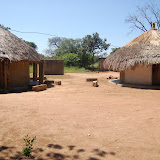
The anticipation of who my family would be and what my hut would look like excited me. My dream was living miles from all the white people with me, in a mud hut, with a poor family full of kids. These hopes and expectations were shattered when I pulled up to a few cement buildings slightly off the road. I almost cried because I was so shocked at the “extravagance” of the place, and was only slightly relieved when I saw a cement- grass thatched-hut for me to sleep in. Because this was not the experience I expected or thought I wanted, I had to fight to have a good attitude.
Therefore through the five days I chose to love my family and be present and fight for contentment. A verse at church on Sunday, was Proverbs….. this really spoke to me and challenged me to change my negative thoughts. Processing the trip after I heard other experiences in huts was difficult for me, but I learned a lot. My challenge was not to survive a hut experience, because that would be easy, BUT to be content with the situation I was in and I really had to battle for that! But I also realized that I had a stigma about the people in rural areas ALL being destitute and poor, creating an “us” and “them” divide between us. And it was good to be again reminded that all of Africa is not poor, does not need my help, and is made up of real people who have stories and lives… therefore, they should not be boxed into the “pity-poor-box”.
Once I got over myself, it turned out to be lovely. My family was wonderful:
Mama Catherine shared a hut with me and her son, Ivan, who was almost two years old. She was such a hard worker, and was responsible for cooking all the meals for the compound, doing laundry, teaching me everything about rural life in Africa, AND caring for her son. If anyone says Africans are lazy… it’s a big fat LIE!!
I woke to Ivan screaming every morning before seven (whooo!), but I was useless because he feared me. He was adorable 24/7, but equally clingy to his mom and bratty.
My Tata (Grandma) and Papa (Grandpa) were the sweetest folks. Tata was 71 years old and still tilled, swinging a large hoe, in the “garden” (or LARGE farm!). She was a lead farmer for the community in honey and oranges, which she was very proud of! She even had Washington Naval oranges and tangerines… yay, a piece of home! Papa was a retired educator, who was secretary to the commission of education of Uganda under Obote and Amin (two previous corrupt presidents). So he met and advised the presidents!! He studied at Leeds University in the UK and was so wise and sharp with current news. Their sitting room and porch was where I spent a majority of my time, in awe of their wisdom.
Esther was a twenty-one year old cousin who had a daughter, Martha, and was pregnant when I left (but could have had her baby now!). I was always astonished when she would be lifting huge jerry cans of water on her head or giant pots of potatoes and bending over constantly, but in Africa about to have a baby I guess doesn’t stop women from working hard! Her daughter Martha was a quiet doll, who was always watching everything, but shy in interacting.
Others in our compound (a mix of generations with different places to sleep and cook) were three children who were only present the first two days. But Ernest, my six year old cousin, always followed me and loved my watch and camera. I was sad I didn’t get to say goodbye. His sisters were also adorable, Eseza (2) and Esther (4). A fifteen year old cousin was quiet but also a hard worker.
So, I stayed with them five days: farming, cooking, making gnut butter, enjoying tea time, and I even killed the chicken for supper!! Yep, uncle brian if you are reading this… I DID IT!! On my first morning I was dressed for morning church and my mom asked, “Do you want to kill the chicken now?” I agreed with a chuckle (at the irony and out of fear) and grabbed my gloves. Picture this: I am dressed up for church with a dull knife sawing (literally) off the head of a pretty white hen!!!!! Crazy. So with my arm extended as far as possible, keeping a safe distance, I finished cutting the head off the chicken, while my cousin held her down. This is a cultural way in Iteso to honor the visitor- so my mama was SO happy that I did it. At supper, I wasn’t sure if I felt proud I ate what I killed or upset and grossed out that I saw what my food looked like first…. Hmmmmm…..
I helped Tata heap potatoes, weed potatoes, transplant potatoes, and harvest potatoes. I made peanut butter (with what they call gnuts). First the shelled gnuts were roasted in a saucepan with sand, then I mashed them with a long stick, then I grinded it smooth on a grinding rock. It was SO cool to make organic peanut butter (like tjs)!! it was hard work, and I have an even deeper appreciation for pb now when I eat it!
Other highlights were picking spinach leaves, making millet flour (even taking it to a granary), eating with my hands (culturally they use their hands to shovel their food, but it is NOT because they are too poor to afford silverware… they WANT to), smearing cow dung over a winnower (yep yep ), sitting and chatting on mats, and pumping water from a boar hole. One thing that was not so fun, but both a learning experience and another confirmation that life is short, was paying respects to a relative that died. We crammed into a truck and drove an hour, and immediately when the women got out they WAILED at the highest pitch and volume imaginable into a dark hut. I was shuffled in too, and just stared at the women yelling and crying next to the body of the dead man that lay in front of us. All the men stayed outside in chairs, and we, the women, joined them on mats nearby. (There are huge gender role stipulations and differences.)
Every day we did something different and I loved living like a hippie, completely organic in a hut, in the bush of Africa. I am inspired to have a garden now and live simply. it was a HUGE learning experience and I was challenged in ways I never expected to be. Thank you God for such blessings and opportunities!
Lastly, our group traveled to a disintegrated IDP camp in Amuria district, where refugees have fled for safety from the LRA, the Karamajoung, and the recent floods. The conditions were awful, with families living in close-quarters and with maybe ten families to one latrine. Water and food are difficult to come by, and aid is either ill-proportioned or scarce. LAND: after living off the land for five days, I realized why hopelessness is rampant in the camps- because families can no longer work for their food with dignity nor have a place to raise a family. I hate to repeat myself, BUT: Africa is not what I expected it to be! It did not change my life (like I expected), but I did learn that sometimes when I want a great, personal story to tell or a wonderful experience to have, it is at the expense of the comfort of the people I am engaging (and I don’t want to be a part of “slum tourism”).
The anticipation of who my family would be and what my hut would look like excited me. My dream was living miles from all the white people with me, in a mud hut, with a poor family full of kids. These hopes and expectations were shattered when I pulled up to a few cement buildings slightly off the road. I almost cried because I was so shocked at the “extravagance” of the place, and was only slightly relieved when I saw a cement- grass thatched-hut for me to sleep in. Because this was not the experience I expected or thought I wanted, I had to fight to have a good attitude.
Therefore through the five days I chose to love my family and be present and fight for contentment. A verse at church on Sunday, was Proverbs….. this really spoke to me and challenged me to change my negative thoughts. Processing the trip after I heard other experiences in huts was difficult for me, but I learned a lot. My challenge was not to survive a hut experience, because that would be easy, BUT to be content with the situation I was in and I really had to battle for that! But I also realized that I had a stigma about the people in rural areas ALL being destitute and poor, creating an “us” and “them” divide between us. And it was good to be again reminded that all of Africa is not poor, does not need my help, and is made up of real people who have stories and lives… therefore, they should not be boxed into the “pity-poor-box”.
Once I got over myself, it turned out to be lovely. My family was wonderful:
Mama Catherine shared a hut with me and her son, Ivan, who was almost two years old. She was such a hard worker, and was responsible for cooking all the meals for the compound, doing laundry, teaching me everything about rural life in Africa, AND caring for her son. If anyone says Africans are lazy… it’s a big fat LIE!!
I woke to Ivan screaming every morning before seven (whooo!), but I was useless because he feared me. He was adorable 24/7, but equally clingy to his mom and bratty.
My Tata (Grandma) and Papa (Grandpa) were the sweetest folks. Tata was 71 years old and still tilled, swinging a large hoe, in the “garden” (or LARGE farm!). She was a lead farmer for the community in honey and oranges, which she was very proud of! She even had Washington Naval oranges and tangerines… yay, a piece of home! Papa was a retired educator, who was secretary to the commission of education of Uganda under Obote and Amin (two previous corrupt presidents). So he met and advised the presidents!! He studied at Leeds University in the UK and was so wise and sharp with current news. Their sitting room and porch was where I spent a majority of my time, in awe of their wisdom.
Esther was a twenty-one year old cousin who had a daughter, Martha, and was pregnant when I left (but could have had her baby now!). I was always astonished when she would be lifting huge jerry cans of water on her head or giant pots of potatoes and bending over constantly, but in Africa about to have a baby I guess doesn’t stop women from working hard! Her daughter Martha was a quiet doll, who was always watching everything, but shy in interacting.
Others in our compound (a mix of generations with different places to sleep and cook) were three children who were only present the first two days. But Ernest, my six year old cousin, always followed me and loved my watch and camera. I was sad I didn’t get to say goodbye. His sisters were also adorable, Eseza (2) and Esther (4). A fifteen year old cousin was quiet but also a hard worker.
So, I stayed with them five days: farming, cooking, making gnut butter, enjoying tea time, and I even killed the chicken for supper!! Yep, uncle brian if you are reading this… I DID IT!! On my first morning I was dressed for morning church and my mom asked, “Do you want to kill the chicken now?” I agreed with a chuckle (at the irony and out of fear) and grabbed my gloves. Picture this: I am dressed up for church with a dull knife sawing (literally) off the head of a pretty white hen!!!!! Crazy. So with my arm extended as far as possible, keeping a safe distance, I finished cutting the head off the chicken, while my cousin held her down. This is a cultural way in Iteso to honor the visitor- so my mama was SO happy that I did it. At supper, I wasn’t sure if I felt proud I ate what I killed or upset and grossed out that I saw what my food looked like first…. Hmmmmm…..
I helped Tata heap potatoes, weed potatoes, transplant potatoes, and harvest potatoes. I made peanut butter (with what they call gnuts). First the shelled gnuts were roasted in a saucepan with sand, then I mashed them with a long stick, then I grinded it smooth on a grinding rock. It was SO cool to make organic peanut butter (like tjs)!! it was hard work, and I have an even deeper appreciation for pb now when I eat it!
Other highlights were picking spinach leaves, making millet flour (even taking it to a granary), eating with my hands (culturally they use their hands to shovel their food, but it is NOT because they are too poor to afford silverware… they WANT to), smearing cow dung over a winnower (yep yep ), sitting and chatting on mats, and pumping water from a boar hole. One thing that was not so fun, but both a learning experience and another confirmation that life is short, was paying respects to a relative that died. We crammed into a truck and drove an hour, and immediately when the women got out they WAILED at the highest pitch and volume imaginable into a dark hut. I was shuffled in too, and just stared at the women yelling and crying next to the body of the dead man that lay in front of us. All the men stayed outside in chairs, and we, the women, joined them on mats nearby. (There are huge gender role stipulations and differences.)
Every day we did something different and I loved living like a hippie, completely organic in a hut, in the bush of Africa. I am inspired to have a garden now and live simply. it was a HUGE learning experience and I was challenged in ways I never expected to be. Thank you God for such blessings and opportunities!
Lastly, our group traveled to a disintegrated IDP camp in Amuria district, where refugees have fled for safety from the LRA, the Karamajoung, and the recent floods. The conditions were awful, with families living in close-quarters and with maybe ten families to one latrine. Water and food are difficult to come by, and aid is either ill-proportioned or scarce. LAND: after living off the land for five days, I realized why hopelessness is rampant in the camps- because families can no longer work for their food with dignity nor have a place to raise a family. I hate to repeat myself, BUT: Africa is not what I expected it to be! It did not change my life (like I expected), but I did learn that sometimes when I want a great, personal story to tell or a wonderful experience to have, it is at the expense of the comfort of the people I am engaging (and I don’t want to be a part of “slum tourism”).
Subscribe to:
Posts (Atom)


